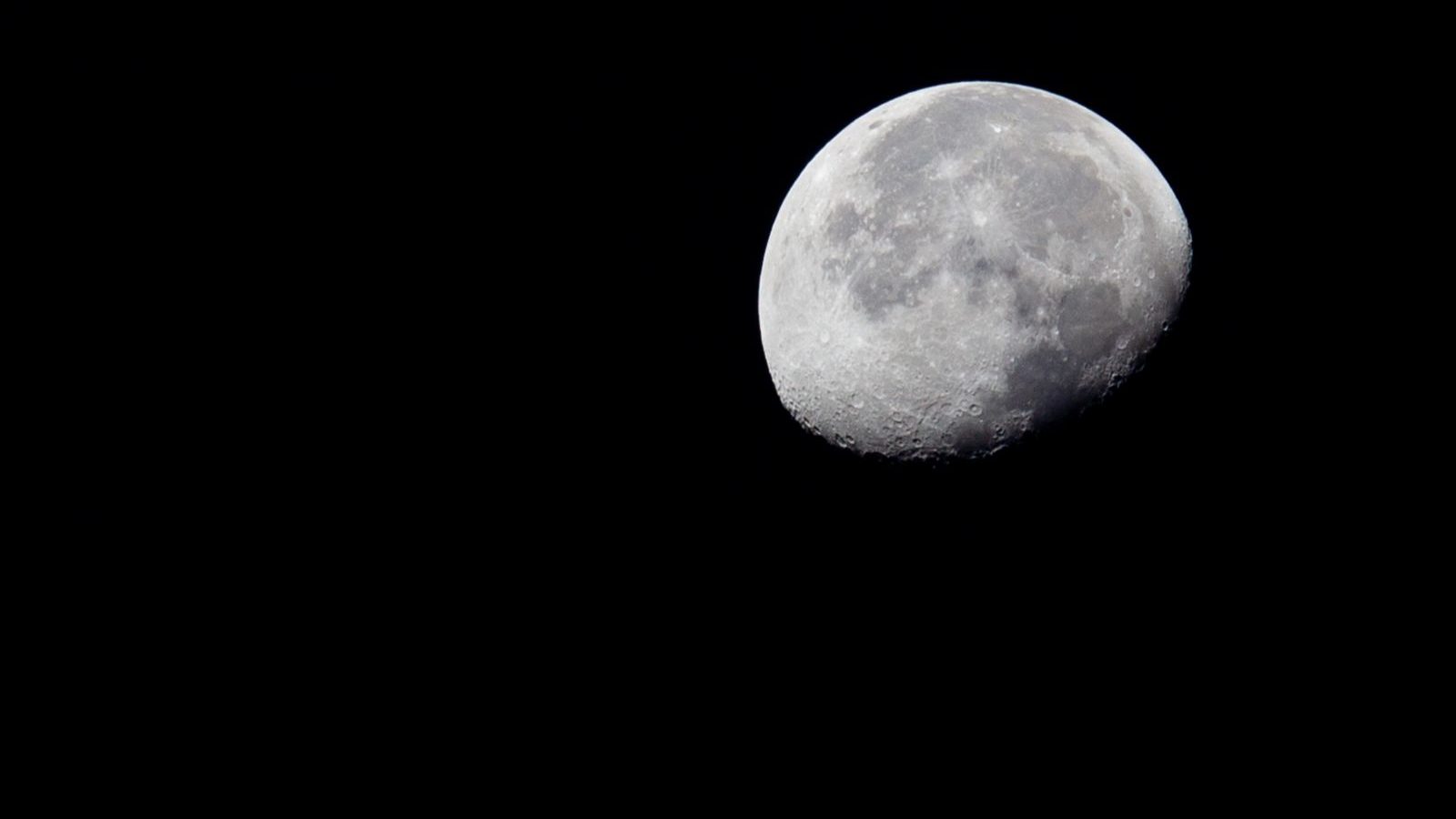
Living on the Moon for the long term means answering four plain questions: where the power comes from, where the water comes from, how to block radiation, and how to ship supplies. The US space agency NASA is now inviting students who have not yet graduated to work on questions related to a Moon base.
On 8 November 2026, at the Kennedy Space Center Visitor Complex in Florida, NASA announced the Moon Base Challenge, with total prize money of $1m. It is open to US high school and post-secondary student teams, who must register through NASA STEM Gateway by 25 January 2027; no specialist engineering experience is required (conditions as of November 2026). The press release was later revised on 12 November to update the name of the competition.
Six topics, handed in the way an engineering team would
The challenge covers six areas: power generation and storage, construction, life support systems, surface mobility, communications networks, and astronaut safety.
The competition runs in several stages, and what teams deliver is modelled on real industry work, such as a trade study (comparing the pros and cons of different options), a concept proposal and a briefing to stakeholders.
The competition was designed jointly by NASA's Office of STEM Engagement and the Moon Base programme, and is run by the Institute of Competition Sciences under a NASA contract. NASA Administrator Isaacman said in the press release that students do not have to wait until graduation to contribute.
The full rules are at moonbasechallenge.org. How the prize money is split and the exact dates of each stage could not be verified for this article, so teams that want to take part should rely on the official rules.
The lunar south pole, chosen for sunlight and scientific value
NASA says the Moon base will be built around the lunar south pole, where astronauts will live, work and explore, and it treats a long-term presence on the Moon as a step towards Mars. NASA says it chose the south pole region for its lighting conditions and scientific value: some spots receive sunlight for long periods, which can support solar power.
A permanent base has to clear four hurdles first
Power: surviving the lunar night
Solar power has to cope with periods without sunlight. Northrop Grumman is developing three technology demonstrations, using power and avionics hardware adapted from the Gateway HALO module, to test systems that can survive the lunar night, including several days in shadow, and to test shared power infrastructure on the surface. NASA also lists power systems among the infrastructure for Phase 2.
Water: first confirm it can be found
NASA scientists hope to find water ice in permanently shadowed regions at the lunar south pole. The planned VIPER rover will explore permanently shadowed craters and is expected to launch from Kennedy Space Center in 2027; the nuclear-powered PROMISE rover is targeted to launch in late 2028 to look for water ice on and below the surface.
Radiation: the data is still preliminary
In the MARE experiment by the Institute of Nuclear Physics of the Polish Academy of Sciences (IFJ PAN), two humanoid phantoms carrying more than 10,000 crystal detectors measured radiation during the 2022 Artemis I mission. The results were published in Radiation Measurements, volume 198, 2026.
The study found that the total radiation dose near the Moon is higher than in low Earth orbit, but the gap is smaller than many expected. The sources also differ: in low Earth orbit the dose comes mainly from low-energy protons in the Van Allen belts, while near the Moon high-energy galactic particles contribute more. The researchers describe the results as preliminary.
Supply: first lay down the cargo line
In Phase 1 (to 2029), NASA plans more than 20 robotic lunar landings, delivering cargo regularly through Commercial Lunar Payload Services (CLPS, a programme in which private companies carry cargo) to build a reliable lunar supply chain; commercial lander delivery missions are already scheduled through 2028. Among them, Voyager's Griffin-1 is planned to launch in late 2026 and is expected to carry the largest commercial lunar surface payload to date, while Intuitive Machines' IM-3 Trinity lander will carry five NASA, six commercial and one private payload.
NASA aims to deliver the Lunar Terrain Vehicle (LTV) to the south pole by 2028, driven by astronauts when crewed and remotely from Earth when not. The propulsive drone MoonFall is also planned to land near the south pole by 2028 to map the terrain and help choose Artemis landing sites.
The timeline announced so far
- Now to 2029: Phase 1 is under way, using robotic missions to test technology and survey sites.
- 2027: the VIPER rover is expected to launch; Artemis III is a 14-day crewed test flight in low Earth orbit with four astronauts, rehearsing docking with test vehicles of the Blue Origin and SpaceX landers.
- 2028: Artemis IV plans to land astronauts on the Moon using a SpaceX or Blue Origin lander; the lunar terrain vehicle and MoonFall are targeted to reach the south pole area by 2028; PROMISE is targeted to launch at the end of the year.
- 2029 to 2032: Phase 2, building infrastructure such as cargo, communications and power.
- Phase 3: assembling a permanent outpost; NASA has not given a date.
The Artemis schedule is the one NASA set out after announcing on 23 October 2026 that it was accelerating the Artemis programme. NASA also says Artemis III hardware progress is on schedule.
What could slow things down
A report by NASA's Office of Inspector General (OIG, an independent internal audit body) on 10 March 2026 said that NASA has committed nearly $7bn to the human landing system since 2019 and expects to spend more than $18bn through fiscal 2030; the SpaceX contract value rose by about 6% and the Blue Origin contract by less than 1%.
The report said both companies' landers face schedule delays, technical difficulties and integration challenges, and that NASA currently cannot rescue astronauts stranded in space or on the lunar surface after a catastrophic event; it made five recommendations. NASA has not published a delay forecast for whether the 2028 landing will happen on time.
The challenge's registration deadline, 25 January 2027, comes before the crewed Moon landing planned for 2028; the permanent outpost does not yet have a date.
Sources
- NASA: NASA Announces $1 Million to Students for Moon Base Challenge (2026-11-08) https://www.nasa.gov/news-release/nasa-announces-1-million-to-students-for-moon-base-challenge/
- NASA: What Is the Moon Base? (2026-11) https://www.nasa.gov/learning-resources/for-kids-and-students/what-is-the-moon-base/
- NASA Office of Inspector General: Artemis Lander Program Faces Schedule Delays and Unmitigated Crew Safety Risks (2026-03-10) https://oig.nasa.gov/news/artemis-lander-program-faces-schedule-delays-and-unmitigated-crew-safety-risks
- ScienceDaily: NASA Reveals Bold New Plan to Return Astronauts to the Moon in 2028 (2026-11-09) https://www.sciencedaily.com/releases/2026/11/261108233054.htm
- ScienceDaily: NASA's Moon Base Is Taking Shape With 20+ Lunar Landings Planned (2026-08-11) https://www.sciencedaily.com/releases/2026/08/260810015706.htm
- ScienceDaily: Artemis I Mission Reveals Surprising Radiation Levels Near the Moon (2026-10-28) https://www.sciencedaily.com/releases/2026/10/261027063659.htm
Prices and details correct as of November 2026
Compiled by the F50 Editorial Team from public sources, for general reference only and not professional advice. Details are correct as of the publication date and may change.
Sources
- NASA: NASA Announces $1 Million to Students for Moon Base Challenge ()
- NASA: What Is the Moon Base? ()
- NASA Office of Inspector General: Artemis Lander Program Faces Schedule Delays and Unmitigated Crew Safety Risks ()
- ScienceDaily (NASA materials): NASA Reveals Bold New Plan to Return Astronauts to the Moon in 2028 ()
- ScienceDaily (NASA materials): NASA's Moon Base Is Taking Shape With 20+ Lunar Landings Planned ()
- ScienceDaily (IFJ PAN, Radiation Measurements): Artemis I Mission Reveals Surprising Radiation Levels Near the Moon ()
Corrections
Spotted an error? Email support@wedo-search.com