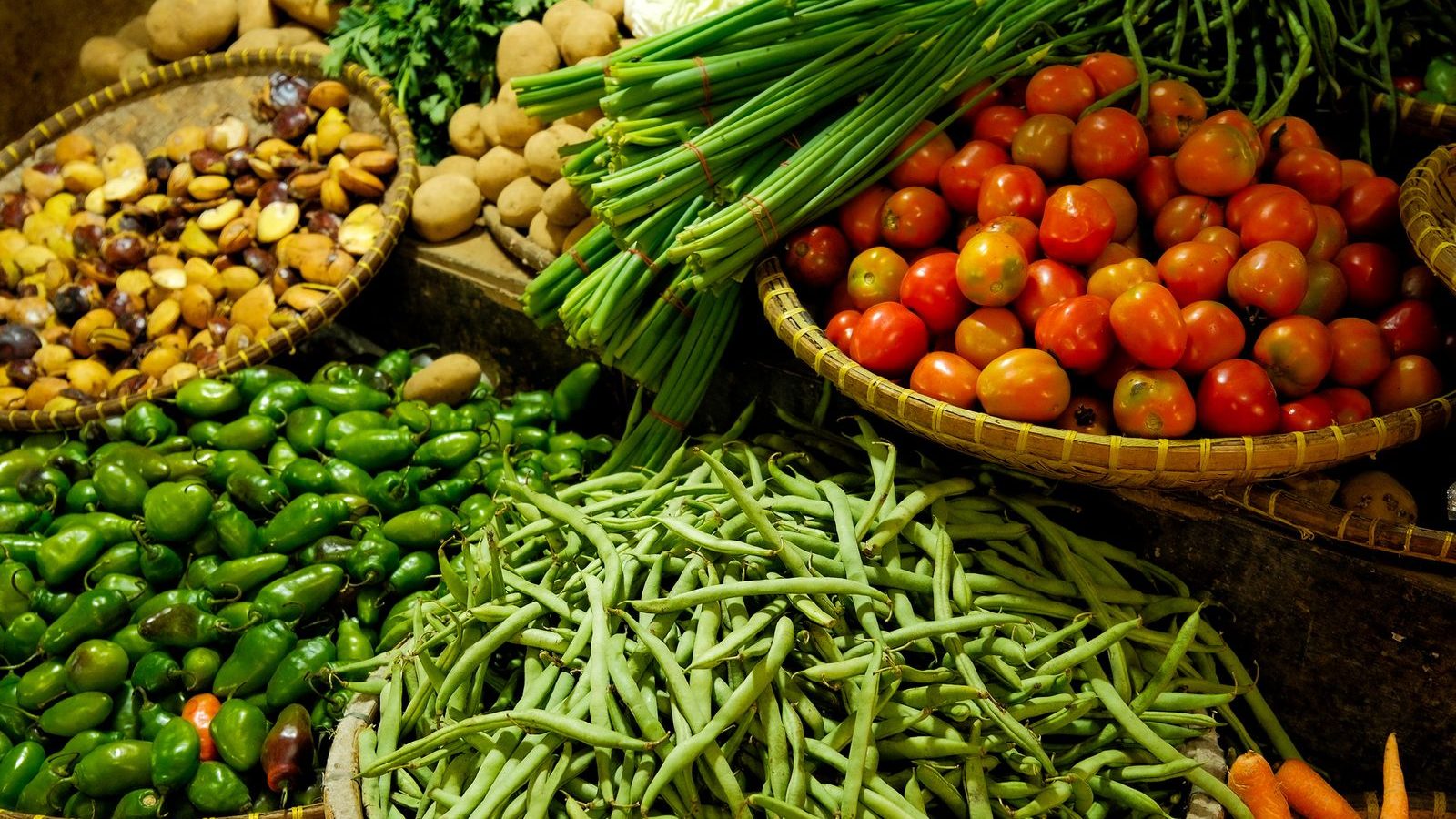
The World Health Organization (WHO) healthy diet fact sheet (the current page is dated January 2026) boils its principles down to a few numbers: at least 400g of fruit and vegetables a day, less than 5g of salt, and free sugars below 10% of total energy. None of these numbers points to an expensive ingredient.
This article turns those numbers into a list you can use when buying groceries and eating out.
Five numbers to remember
- Fruit and vegetables: at least 400g a day for adults and children aged 10 and over; at least 250g for ages 2 to 5 and at least 350g for ages 6 to 9.
- Dietary fibre: at least 25g of naturally occurring fibre a day for adults and children aged 10 and over; at least 15g for ages 2 to 5 and at least 21g for ages 6 to 9.
- Free sugars: less than 10% of total daily energy, which is about 50g or roughly 12 level teaspoons on a 2,000-calorie diet; 5% or less may bring further benefits.
- Salt: less than 5g a day for adults, equivalent to 2g of sodium. Hong Kong's Centre for Food Safety converts this to less than 2,000mg of sodium a day, slightly less than one level teaspoon of salt.
- Fat: total fat at 15% to 30% of total energy for adults; saturated fat no more than 10%; trans fat no more than 1%, and industrially produced trans fat should be avoided altogether.
On the foods to watch, WHO points to processed foods high in saturated fat, trans fat, free sugars or salt. The direction of a shopping list follows from that.
What fruit and vegetables actually cost: US figures
An article published by the US Department of Agriculture's Economic Research Service in July 2021 gives a rare concrete estimate. At 2016 prices, a household of four buying the recommended amounts and types of fruit and vegetables would spend about US$59 a week, around 40% of the budget in the country's Thrifty Food Plan.
The article's sample basket contains 129 cup equivalents (the US unit for measuring portions of fruit and vegetables) and costs US$59.20, an average of about US$0.46 per cup equivalent.
In the same article, baked potatoes cost about US$0.20 per cup equivalent and kale about US$0.79, a gap of nearly four times. The article also says many items cost between roughly US$0.40 and US$0.80 per cup equivalent.
These are US prices from 2016 and cannot be converted into Hong Kong grocery costs. As of November 2026, this article has not verified local Hong Kong prices, so it lists no Hong Kong dollar prices and uses the figures only as a reference point.
Putting the principles into a shopping list
- Budget for fruit and vegetables first: aim for 400g a day per adult, compare fresh, frozen and canned options, and swap between them according to that week's prices.
- Choose whole ingredients: favour fresh produce, or frozen fruit, vegetables and meat without preservatives, over processed or ready-made foods, including pickled vegetables.
- Read the nutrition label: compare the sodium content of similar packaged foods side by side and pick the lower one.
- Keep an eye on sugar: bear in mind the limit of about 12 teaspoons of free sugars a day; sweet drinks and desserts are the easiest places to go over.
- Watch the fat: when choosing meat and snacks, avoid options high in saturated fat and stay away from industrially produced trans fat.
- Build up fibre from natural foods: reach the adult target of 25g a day through fruit, vegetables and unprocessed ingredients rather than packaged products.
Eating out: four requests to cut salt
When eating out, controlling salt can start with simply asking. The Centre for Food Safety lists these ways to reduce sodium:
- Choose restaurants taking part in the Department of Health's EatSmart Restaurant Star+ Campaign.
- Ask for sauces on the side, or no sauce at all.
- Ask whether a lower-salt version is available.
- Taste the food first before deciding whether to add seasoning.
All four are things you can ask for at the table, and they help keep you within the 5g daily salt limit.
Price is not only a personal choice
WHO also acknowledges that food prices affect whether healthy food is available and affordable. The fact sheet therefore encourages governments to subsidise producers and retailers of fresh fruit and vegetables, to tax processed foods high in saturated fat, trans fat, free sugars or salt, and to require food service venues to offer affordable healthy choices. Until policy catches up, what individuals can do is let their own shopping trolley move first.
Start with fruit, vegetables and less salt
Budgeting can begin with fruit, vegetables and whole ingredients, and when eating out you can add one request to cut salt. The next time you write a shopping list, try putting "400g" at the top.
This article provides general dietary information only and is not personal medical or nutritional advice. People with particular health conditions should consult a doctor or a registered dietitian.
Prices and details correct as of November 2026
This article is general health information, not medical advice. For any health concern, consult a doctor or registered health professional.
Sources
- World Health Organization: Healthy diet fact sheet ()
- USDA Economic Research Service (Amber Waves): For SNAP households, fruit and vegetable affordability is partly a question of budgeting ()
- Centre for Food Safety, Hong Kong: Sodium Intake Tips for Consumers(undated (accessed) ()
Corrections
Spotted an error? Email support@wedo-search.com