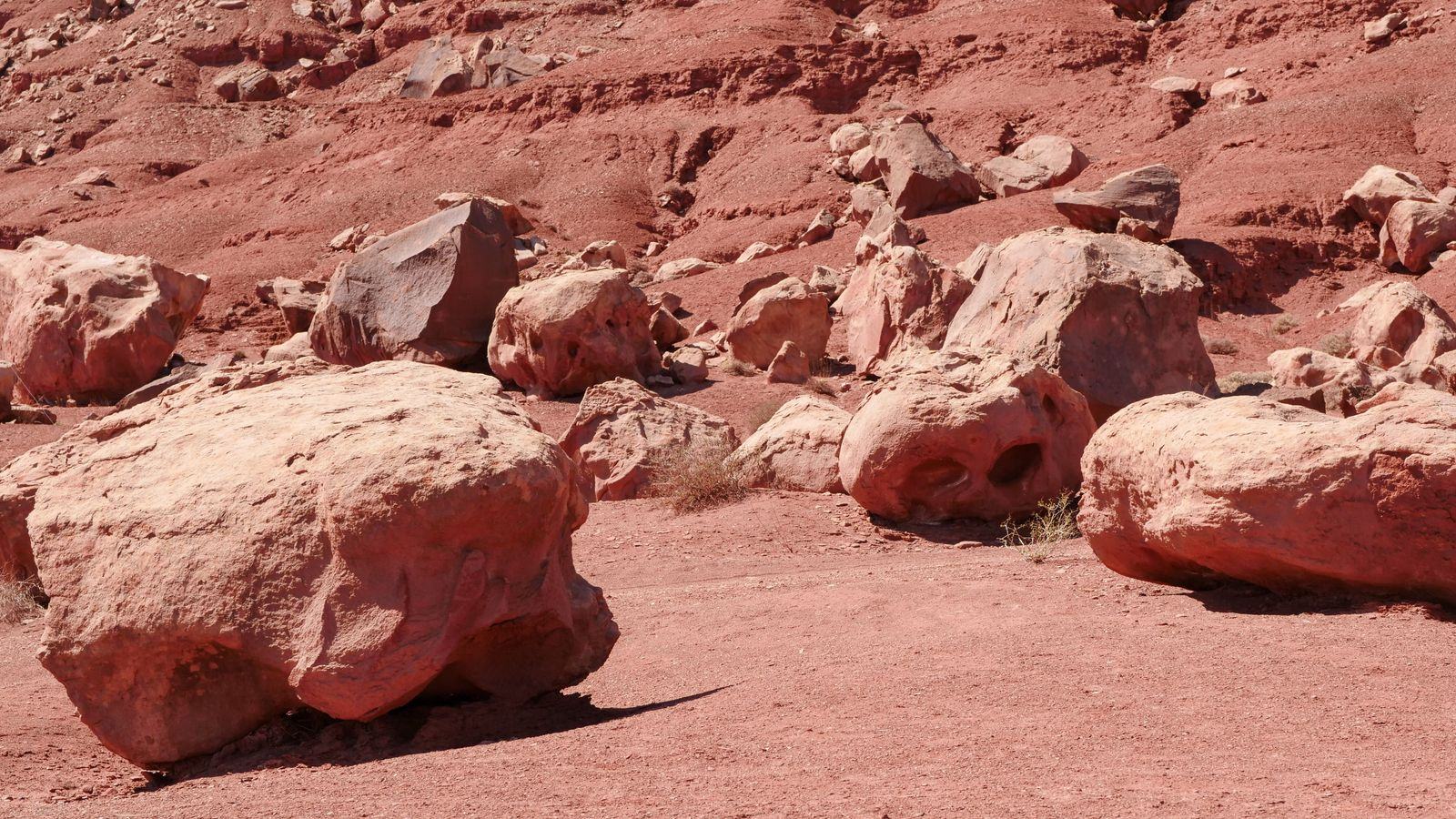
The total distance driven by the Perseverance rover on Mars has passed that of Opportunity, making it the furthest-travelled vehicle off Earth.
NASA says Perseverance's odometer reached 28.10 miles (45.22 km) on 11 October 2026, the 2,006th sol of the mission. That passes the 28.06 miles (45.16 km) held by Opportunity and sets a new record for total distance driven by a vehicle off Earth. NASA Science announced it on 12 October 2026 in the Perseverance mission blog, and updated the post on 13 October.
The original mission called for Perseverance to drive no more than 12.4 miles. Its odometer now reads 28.10 miles.
The record-breaking day covered under 100 metres
The drive on 11 October that took the total past Opportunity was 299.6 feet (91.31 m), hardly a long journey. NASA says the furthest Perseverance has driven in a single sol is 1,351 feet (412 m).
The real gap is in time. The science website EarthSky, in a report on 13 October 2026, cites the same 28.10-mile and 28.06-mile figures and says Perseverance took about five and a half years to reach this distance, while Opportunity took almost 15.
Who else is on the off-world distance list
In the same blog post, NASA lists the distances driven by other vehicles for comparison:
- Curiosity: more than 23.65 miles (38.07 km)
- Spirit: 4.8 miles (7.7 km)
- Sojourner: about 330 feet (100 m)
- Apollo 17 astronauts: 22.2 miles (35.7 km)
- Lunokhod 2: 24.2 miles (39 km)
All the figures above are as given in that NASA blog post.
Ninety per cent of the distance used autonomous navigation
NASA says AutoNav, the autonomous navigation system in which the rover works out its own route, was used for more than 90% of Perseverance's total driving distance. Opportunity and Spirit used a similar system for about 5%.
Next stop: the western rim of Jezero Crater
When NASA announced the record, Perseverance was heading for a spot called Idubi, in the Lac de Charmes region off the western rim of Jezero Crater. Scientists hope to find traces of ancient hydrothermal systems there.
After that, Perseverance will follow the crater rim south to Rainbow Falls, a block of ancient crust 328 feet (100 m) wide.
NASA describes what Perseverance is investigating as possibly some of the oldest terrain explored in the solar system. So far it has collected 29 rock and regolith samples from the crater floor, a delta fan and the crater rim.
Mission extended to roughly the end of 2028
NASA has approved the mission's first extension. It began in October 2026 and runs through roughly the end of 2028, covering exploration of the crater rim.
What is known and what is not
What NASA has published: the total distance as of 11 October 2026, the distance driven on the record-breaking day, the route ahead, the number of samples collected, and the mission period extended to roughly the end of 2028.
The available sources do not cover the following:
- Whether the mission continues after the end of 2028: neither the NASA blog nor the EarthSky report says.
- When and how the 29 samples will be returned to Earth: neither source mentions a timetable for sample return.
- The latest distance after 11 October 2026: this article could not verify it.
In summary
A rover originally meant to drive only 12.4 miles has driven 28.10 miles in about five and a half years, with more than 90% of the total distance using autonomous navigation. Next, it will head south along the crater rim.
Prices and details correct as of November 2026
Compiled by the F50 Editorial Team from public sources, for general reference only and not professional advice. Details are correct as of the publication date and may change.
Sources
Corrections
Spotted an error? Email support@wedo-search.com