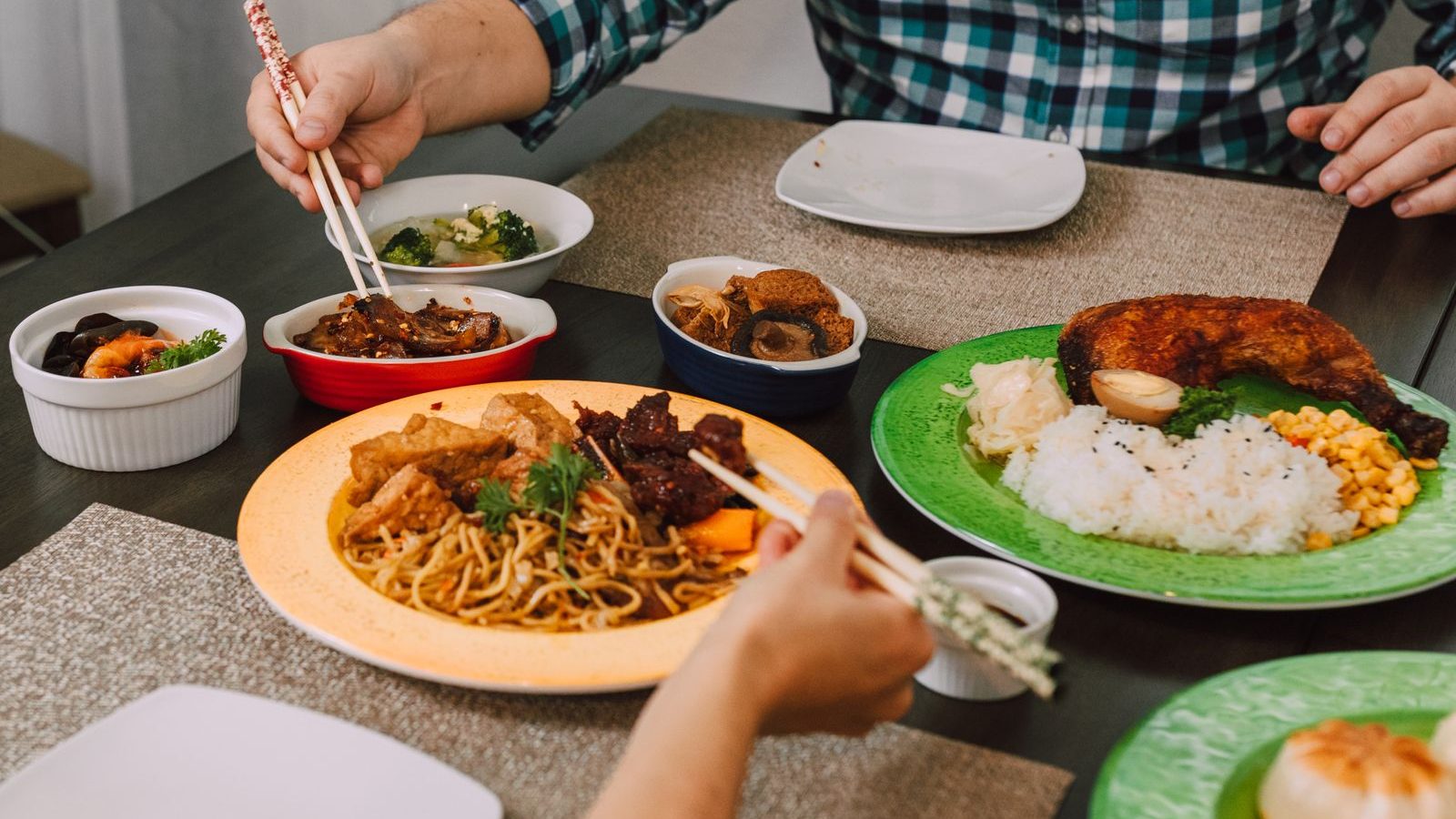
If you hand household chores to someone else and get a few hours back, is the money well spent? One study of couples found that what matters most is what you do with those hours.
The paper, titled "Buying (Quality) Time Predicts Relationship Satisfaction", is by Ashley V. Whillans, Jessie Pow and Joe J. Gladstone. It appeared in the Journal of Personality and Social Psychology, volume 128, issue 4 (April 2025), pages 821–863. It found that spending money to save time ("time-saving spending" below) is associated with higher relationship satisfaction, and most clearly when the time saved is spent with a partner.
To be clear, this is correlational research. The Associated Press (AP) reported that the study describes an association between the two and does not prove cause and effect. We could not check the full journal text, so the figures below come from media reports and research-summary sites.
Seven studies, mostly UK longitudinal data
The research comprises seven studies. According to Harvard Business School Working Knowledge, it involved nearly 40,000 participants. The data include an 11-year UK household longitudinal study (UK Household Longitudinal Study), daily diaries recording purchases and time use, and several surveys of people in stable relationships.
The psychology website Simply Psychology lists some of the samples: Study 1 used UK longitudinal data covering 33,456 people and about 98,000 observations; Study 2 was a six-week diary with 71 dual-earner participants; Study 3 was a survey of 691 people; Studies 4a and 4b were recall experiments with 600 and 401 people respectively; Study 6 was a pre-registered survey of 1,000 full-time employees. The total numbers given by HBS and Simply Psychology do not fully match, but the UK longitudinal data make up most of the sample.
According to AP, the participants were dual-earner couples in full-time work. In the six-week diary study, partners rated themselves happier, and reported higher relationship satisfaction, on days when they had spent money to save time.
How much you spend matters little; where the time goes matters
HBS reports that the amount spent, whether the purchase is a product or a service, and whether it is practical or hedonic are not the key. What makes a difference is how many hours are saved and how the freed-up time is used.
What is bought is time; the key is how that time is spent. A Psychology Today article notes that time together involving mutual support and shared positive emotions had the strongest link with higher satisfaction.
HBS also reports that the higher the stress a couple is under, the greater the benefit of time-saving spending, and that the benefits may build up over time for couples who do it regularly.
Only about half of those who can afford it actually do it
Time-saving spending is not rare. HBS cites one survey in which about 43% of respondents had spent money to save time with their partner in the previous week, saving about 18 hours on average.
But being able to afford it does not mean people do it. A Psychology Today article says that among participants who could afford time-saving spending, only 48% actually did so.
Limitations, and what money cannot fix
The limitations listed by Simply Psychology include:
- The data rely on participants' self-reports.
- Some experiments were recall tasks rather than real interventions.
- Samples come mostly from Western industrialised societies.
- The research does not cover same-sex couples.
- Effects are consistent but generally small.
Nor does it mean everyone should spend more. According to AP, Whillans noted that not everyone can afford to outsource larger household tasks. The therapist Targol Hasankhani cautioned that outsourcing cannot replace communication, and that deeper problems such as inequality in the relationship or feeling unheard do not disappear because someone else helps with the chores.
Keeping the saved time for the two of you: six approaches
- Do a time audit first to see where each week's time goes (AP).
- Decide together which services to buy, rather than one partner arranging it alone (HBS).
- You do not have to outsource everything; outsourcing part of it also helps (AP).
- Use the freed-up time for shared activities, not for working overtime or for spending apart (HBS, AP).
- Agree with your partner what "quality time" means. It need not be a specific activity; the point is positive emotion and feeling supported. Change can be gradual, with active communication (HBS, Psychology Today).
- On a limited budget, asking relatives or friends to help look after children can also free up time (Psychology Today).
The most practical lesson of this research is not on the bill. The hours saved can be counted, but whether they end up being spent on the two of you is the part most strongly linked with relationship satisfaction.
Sources
- Harvard Business School Working Knowledge: Why Outsourcing Chores Is Good for Your Relationship (2025-09-15) https://www.library.hbs.edu/working-knowledge/why-outsourcing-chores-is-good-for-your-relationship
- Psychology Today (Closer Encounters): How Couples Can Buy More Quality Time (2025-06-29) https://www.psychologytoday.com/us/blog/closer-encounters/202506/you-cant-buy-love-but-you-can-buy-quality-time
- Simply Psychology: Buying (quality) time predicts relationship satisfaction (2025-05-20) https://www.simplypsychology.org/?p=85270
- Associated Press via NBC Boston: Ordering takeout or calling the dog walker might lead to a happier relationship (2026-01-03) https://www.nbcboston.com/news/national-international/outsourcing-household-chores-happier-relationship/3871202/
Prices and details correct as of October 2026
Compiled by the F50 Editorial Team from public sources, for general reference only and not professional advice. Details are correct as of the publication date and may change.
Sources
- Harvard Business School Working Knowledge: Why Outsourcing Chores Is Good for Your Relationship ()
- Psychology Today (Closer Encounters): How Couples Can Buy More Quality Time ()
- Simply Psychology: Buying (quality) time predicts relationship satisfaction ()
- Associated Press via NBC Boston: Ordering takeout or calling the dog walker might lead to a happier relationship ()
Corrections
Spotted an error? Email support@wedo-search.com