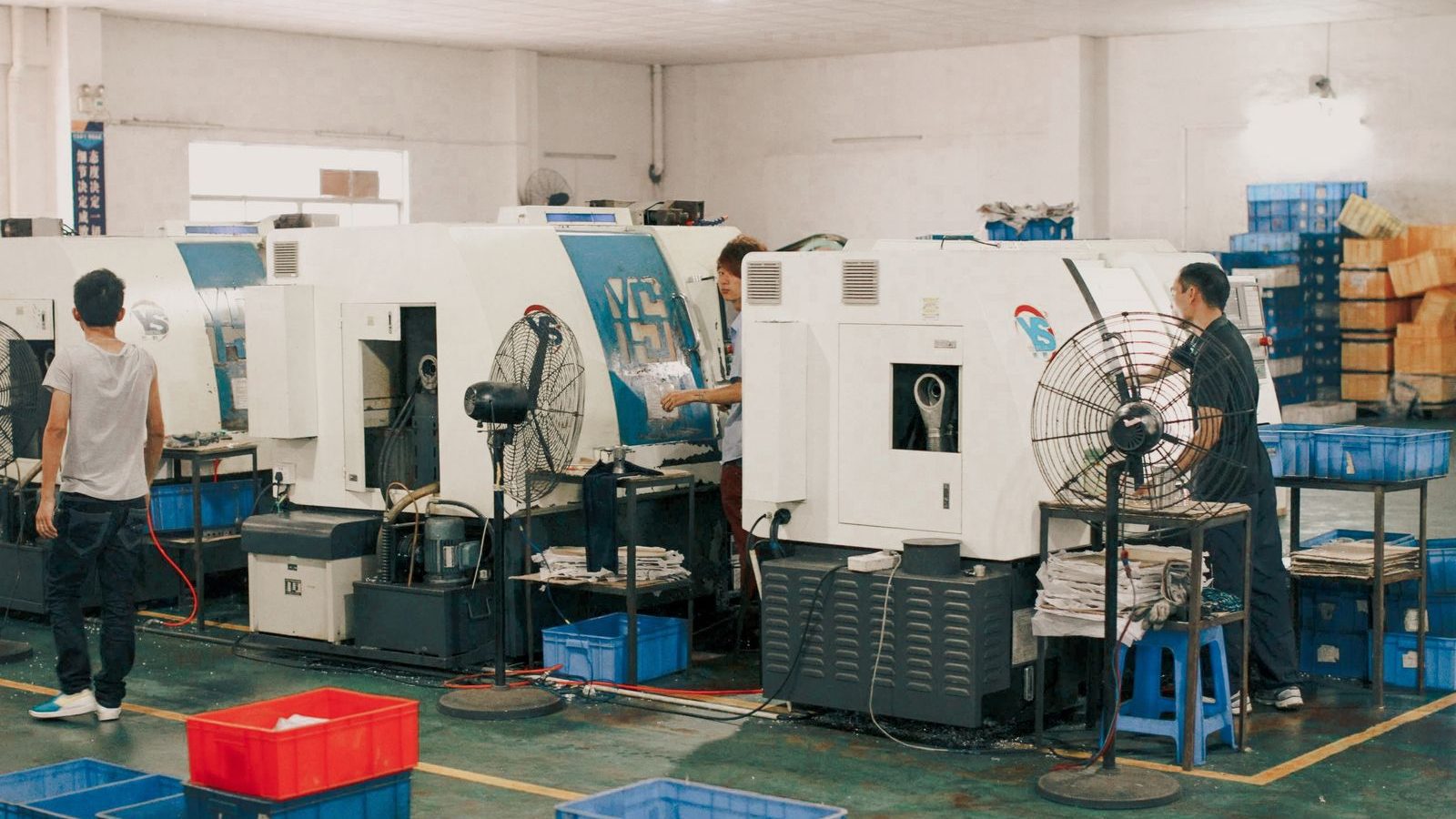
At the end of June 2026, employers in Taiwan had about 296,000 vacancies open at the same time, 29,000 more than a year earlier. The largest share was in manufacturing: 111,000 vacancies, or 37.4% of the total.
The figures come from the Ministry of Labour's Survey on Job Vacancies at End-June 2026 (Year 115 of the Republic of China calendar), published on 30 September 2026. The job vacancy rate across industry and services was 3.3%, up 0.3 percentage points from a year earlier. The ministry attributed the increase mainly to continued growth in demand linked to emerging technologies such as artificial intelligence.
Yet the most useful part of the survey is a line the officials draw themselves: more vacancies do not mean a labour shortage.
Which sectors hold the 296,000 vacancies
By sector, industry had 132,000 vacancies, a vacancy rate of 3.7%, while services had 164,000, a rate of 3.1%. According to Peoples News, industry vacancies rose by 24,000 from a year earlier and services by only 5,000, so most of the new openings came from industry.
- Manufacturing: 111,000 vacancies, 37.4% of the total, a vacancy rate of 3.7%, above the overall average
- Wholesale and retail: about 48,000, or 16%
- Accommodation and food services: about 27,000, or 9%, with a vacancy rate of 4.5%, the highest among the main sectors
- Human health and social work: about 19,000
- Construction: about 18,000
By working hours, full-time vacancies numbered 272,000 (91.9%) and part-time vacancies 24,000 (8.1%). In other words, the vast majority of this demand is for full-time posts.
Hiring one full-time employee takes 3.1 months on average
The average external recruitment time for full-time vacancies was 3.1 months, 0.1 months shorter than a year earlier and unchanged from the previous quarter. Note that this is an average across all sectors, not a figure for any single sector.
The gaps between sectors are sizeable. Human health and social work took longest, at 4.6 months on average, followed by construction at 4 months. By occupation, elementary technical and manual workers were quickest to hire, at 2.1 months on average. Peoples News reported that the average recruitment time in industry was 3.1 months, 0.5 months shorter, while in services it was 0.2 months longer.
For manufacturing, the ministry said only that its recruitment time was shorter than the overall average; 1111 Job Bank, in a report on 2 October 2026, put it at 2.9 months.
Why officials say a vacancy is not a shortage
The ministry's definition of a job vacancy is clear: an existing post that an employer is actively seeking to fill from outside and has not yet filled, including posts where a candidate has been accepted but has not yet started. Reserve manpower, openings created by expected departures, posts frozen by policy, internal transfers and overseas vacancies are all excluded. The vacancy rate is calculated as the number of vacancies divided by the sum of vacancies and employees, multiplied by 100%.
A labour shortage is a different matter: it means labour demand exceeds the available labour supply. The ministry regards vacancies as a normal feature of economic activity that reflects demand, and Peoples News quoted it as saying the number of vacancies alone should not be used to judge a manpower gap.
Manufacturing illustrates the point. According to Peoples News, the overall accession rate was 2.42% and the separation rate 2.3%, while manufacturing's accession rate was 2.08% and its separation rate 1.91%, both below the overall average. The ministry described manufacturing as having relatively low turnover and short recruitment times, with a relatively stable workforce. The many vacancies are more likely to reflect expanding demand than an inability to keep staff.
Accommodation and food services are the opposite case. The ministry said the accommodation sector's accession rate was 3.25% and its separation rate 4.03%, both clearly above the services average, which may be one reason for the sector's high vacancy rate. People arrive quickly and leave even more quickly.
Analysis: what the figures mean for job seekers, HR and headhunters
What follows is the editors' inference from the official and media data above, not commentary from the ministry or the industry.
- Job seekers: 3.1 months is the average external recruitment time for full-time vacancies, and the shortest occupational group (2.1 months) and the longest sector (4.6 months) are more than twice as far apart. In health care or construction, employers usually wait longer; in manufacturing, recruitment is relatively quicker.
- HR: to judge whether a company is genuinely short of people, look at accession and separation rates as well as the number of vacancies. The manufacturing example shows that many vacancies may simply mean expansion; the accommodation example is a reminder that high turnover can make the same post open again and again. 1111 Job Bank also said that in health care and construction, where recruitment takes longer, employers need to improve their appeal through pay and benefits, working conditions and career development.
- Headhunters: both the ministry and 1111 Job Bank link rising demand to emerging technologies such as artificial intelligence, and the latter points to demand for professional, technical and equipment-operation talent. Part-time vacancies account for only 8.1%, so most of the opportunity lies in full-time posts.
The scope of the survey should also be kept in mind. It is a quarterly survey that the ministry has run since April of Year 114 (2025). This round was conducted from 1 to 31 July 2026, with 4,004 valid responses from establishments, and excludes agriculture, forestry, fishing and animal husbandry, government agencies, schools from primary level upwards, and religious and professional bodies, among others.
Look at turnover as well as vacancies
It is easy to read 296,000 as a nationwide labour shortage, but the officials have already warned against doing so. The more useful signal lies in the accession and separation rates: in manufacturing, where they are low, vacancies are more likely to come from expanding demand; in accommodation, where they are high, a considerable share of vacancies may come from staff turnover. The next time you see a headline about a surge in vacancies, ask one question: are these posts newly created, or have they just been vacated?
Prices and details correct as of October 2026
Compiled by the F50 Editorial Team from public sources, for general reference only and not professional advice. Details are correct as of the publication date and may change.
Sources
- 勞動部: 115年6月底職位空缺概況調查統計結果 ()
- 1111人力銀行: 「缺很大」!29.6萬職缺等人來 AI、製造業掀搶才大戰 ()
- 民報: AI帶旺徵才竟不是科技業 全台職缺近30萬「這行」居冠 ()
Corrections
Spotted an error? Email support@wedo-search.com